 Sports Business Brand Latest Brand News, Sports, Entertainment, Marketing, Sponsorships

By Simon Chadwick
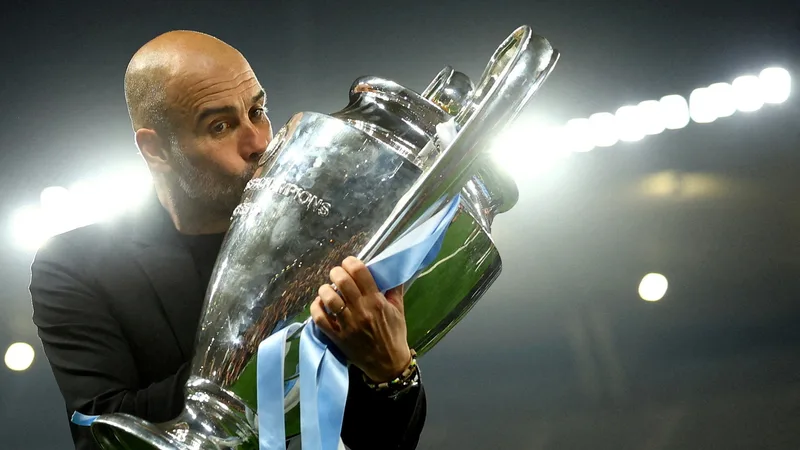
Abu Dhabi has long focused on growth and international prestige – values that also define Guardiola’s managerial identityCopyright:Reuters
Speculation that Pep Guardiola could step down as manager of Abu Dhabi-owned Manchester City has been rife for much of the UK soccer season. As this year’s Premier League drew to a close on Sunday, those rumours proved well-founded. The Catalan is departing, with Enzo Maresca, the Italian former Chelsea coach, widely tipped to succeed him.
Guardiola has overseen the most successful period in City’s history, including winning six English Premier League titles, the Uefa Champions League and the Fifa Club World Cup.
Besides on-field considerations, the transition comes during an evolution in the club’s ownership structure, which remains under the control of Abu Dhabi-linked entities, initially through Abu Dhabi United Group and more recently via Newton Investment and Development.
Sheikh Mansour bin Zayed Al Nahyan, the vice president and deputy prime minister of the UAE, oversees both companies.
When the initial purchase of City was completed in 2008, many observers viewed the deal as the latest example of billionaire ownership transforming English football through vast financial backing, following the precedent set by Roman Abramovich, a Russian oligarch, at Chelsea FC.
Yet, despite bullish rhetoric from senior officials, City secured only two major trophies over the following four years: the FA Cup and the Premier League title.
Things began to change more decisively in 2012, when tech entrepreneur and former airline executive Ferran Soriano became the club’s chief executive, a role he still holds today.
Soriano served as vice president and chief financial officer at FC Barcelona in the mid-2000s, around the time Guardiola was building his reputation there after spells as a player and coach elsewhere. When Soriano left Barcelona, Guardiola was promoted to first team manager, launching one of the most successful managerial eras in modern football.
In his 2009 book, Goal: The Ball Doesn’t Go In By Chance, Soriano argues that footballing success is mainly the product of meticulous planning, strong institutional structures and rational strategy, rather than luck.
It was therefore no surprise that Guardiola and Soriano were reunited at City in 2016. Guardiola’s arrival at Manchester City looked almost tailor-made: an oil- and gas-rich owner with significant financial resources, a familiar leadership team already driving transformational change, and a mandate to deliver sustained elite-level success.
Guardiola may have been crowned king of east Manchester, but the power behind the throne has been, and remains, in the hands of Soriano.
Even the rumoured pursuit of Maresca bears Soriano’s hallmarks. The Italian previously worked as one of Guardiola’s assistants and already understands the club’s internal culture and playing philosophy – a classic example of institutional succession planning.
Manchester City’s success, however, remains clouded by an unresolved Premier League case concerning more than 100 alleged breaches of the league’s financial regulations over a nine-year period.
What Guardiola has ultimately provided Abu Dhabi is a form of sporting symbiosis. The governing ethos of the emirate has long centred on growth, international prestige and the pursuit of world-class execution – values that also define Guardiola’s managerial identity and Manchester City’s footballing model under his leadership.
All of which may sound familiar to those who have observed Guardiola or watched Manchester City over the past 10 years. In that sense, Guardiola and senior City executives such as Soriano have helped to reinforce a wider Abu Dhabi brand narrative already associated with partnerships involving institutions and companies such as the Louvre museum and Sorbonne University of France, and Ferrari of Italy.
The big issue now for Maresca, Soriano and Manchester City is whether that level of success can be sustained after Guardiola’s departure.
The pressure is on, particularly with developments in the club’s financial case appearing close. The financial implications of any decline would also be considerable.
Winning the Premier League can generate close to £200 million ($268 million) in prize money and related revenues. Likewise, winning the Champions League can generate around £130 million. Early knockouts can substantially reduce those returns.
Sponsorship agreements are also tied to on-field performance, meaning any sustained drop in standards eventually affects commercial revenues, too.
Will Soriano’s meticulous planning win through once again, enabling Maresca to sustain Guardiola’s model? Or will Guardiola’s exit precipitate a decline in performance standards?
Either way, prominent figures in Abu Dhabi will be watching closely.
Simon Chadwick is professor of AfroEurasian Sport at Emlyon Business School