 Sports Business Brand Latest Brand News, Sports, Entertainment, Marketing, Sponsorships

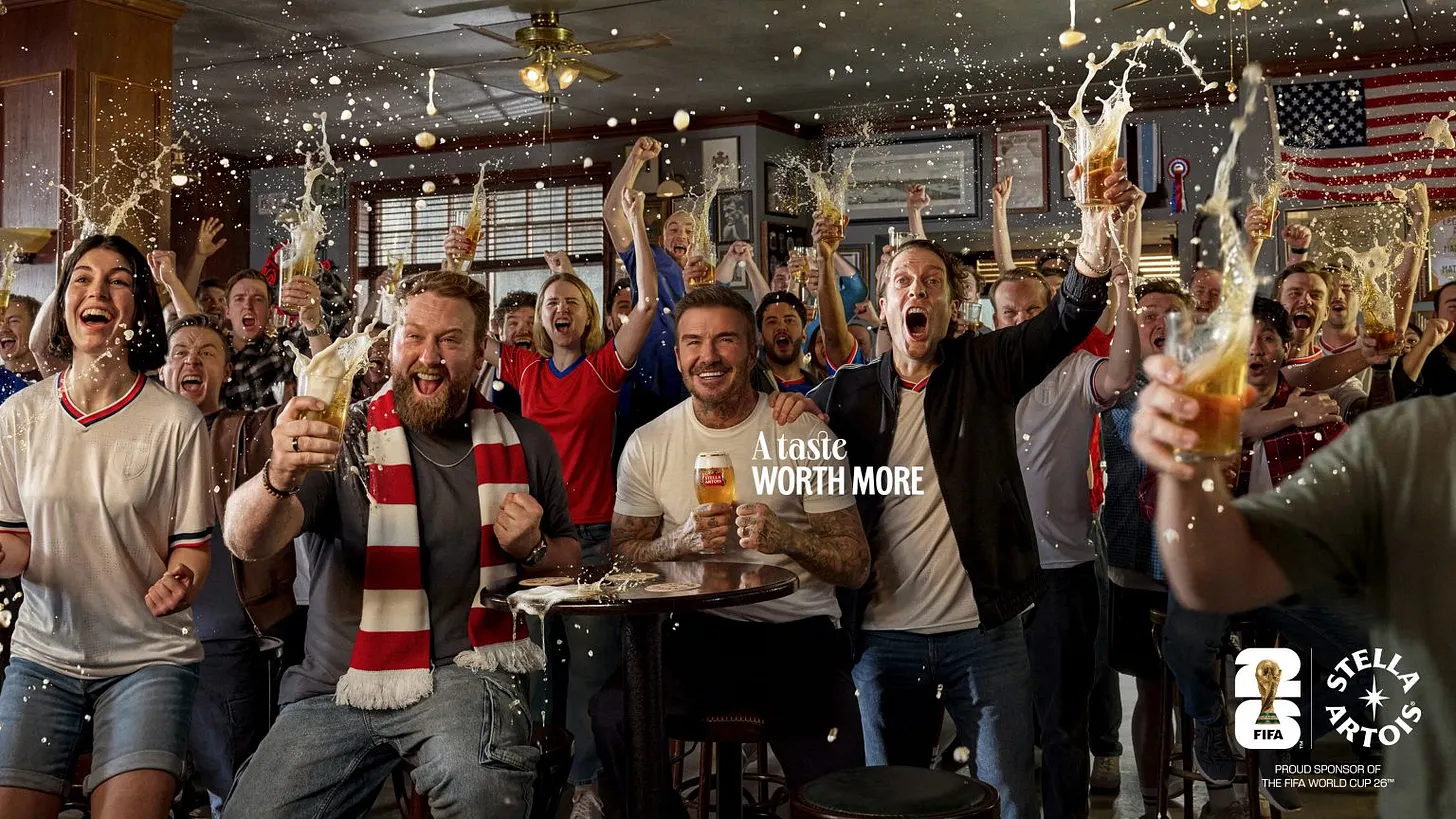
The former England captain is one of the tournament’s most valuable commercial assets.
|
|
By David Skilling
David Beckham’s playing career ended more than a decade ago, yet he remains one of the most visible faces of the 2026 World Cup.
When you turn on a broadcast, scroll social media, walk through an airport or pass a billboard, there’s a good chance Beckham appears somewhere in the background. Adidas, Lay’s, Stella Artois, McDonald’s, Lenovo, Home Depot and Bank of America have all placed him at the centre of major campaigns surrounding the tournament. Market analysts estimate those partnerships could generate around $25 million.
The obvious explanation is that Beckham is one of the world’s most famous football personalities. The more interesting explanation is that Beckham has become something increasingly rare in modern sport: a commercial asset that feels almost entirely risk-free.
Football has never produced a shortage of global stars, with every generation creating players capable of dominating headlines, selling shirts and attracting sponsors. Less common are athletes who remain commercially relevant across multiple decades, markets, and generations of consumers. Most athletes peak commercially alongside their sporting careers, but Beckham’s commercial career now feels almost detached from football altogether.
Supporters who watched him bend free-kicks for England and Manchester United remember him differently from younger audiences who know him primarily through Netflix documentaries, fashion campaigns or celebrity culture. Yet both groups recognise him instantly, and that recognition carries enormous value during an event like the World Cup, where brands compete for attention in a crowded environment.
Historically, football sponsorship revolved around current players because active athletes sat closest to fan attention, and brands wanted the tournament’s biggest stars because they delivered real-time relevance, and success on the pitch often translated directly into commercial value. That relationship is still important, but it has become more complicated.
Modern athletes operate inside an environment where visibility comes from multiple directions. Social media, streaming platforms, creator content and athlete-owned media have all extended the lifespan of sporting personalities. Retirement no longer removes someone from public view in the same way it once did, and nobody navigated that transition better than Beckham.
While many athletes struggle to figure out what their second career will look like, Beckham spent years building one that began while he was still an active player. Fashion and culture partnerships expanded his audience beyond football, and ownership stakes created business credibility. Inter Miami reconnected him with the sport at the executive level, while carefully selected media appearances maintained his visibility without oversaturating the market. The result is a public image that feels unusually stable.
For brands investing millions in the biggest sporting event on the calendar, predictability carries a premium.
That’s particularly important because the World Cup has changed. Sponsors are buying access to a media event that spans fashion, entertainment, hospitality, social media, and popular culture. All areas where Beckham sits very comfortably.
Few former players can move between a sports commercial, a luxury campaign, a mainstream television appearance and a business conference without the transition feeling forced, but Beckham can because he spent decades building a public identity that was never exclusively tied to one thing.
He wasn’t the first athlete to build a strong personal brand, but he became one of the most successful examples and can be credited as a leading figure in the new era of athletes building leverage beyond sport. A very different mindset from a generation ago, when retirement usually marked the end of an athlete’s commercial peak.
As the 2026 World Cup continues, you’ll see through the ads that brands have focused on familiarity, trust and recognition, which helps explain why one of the World Cup’s most valuable stars isn’t even kicking a ball.