 Sports Business Brand Latest Brand News, Sports, Entertainment, Marketing, Sponsorships

By OJEIKERE AIKHOJE
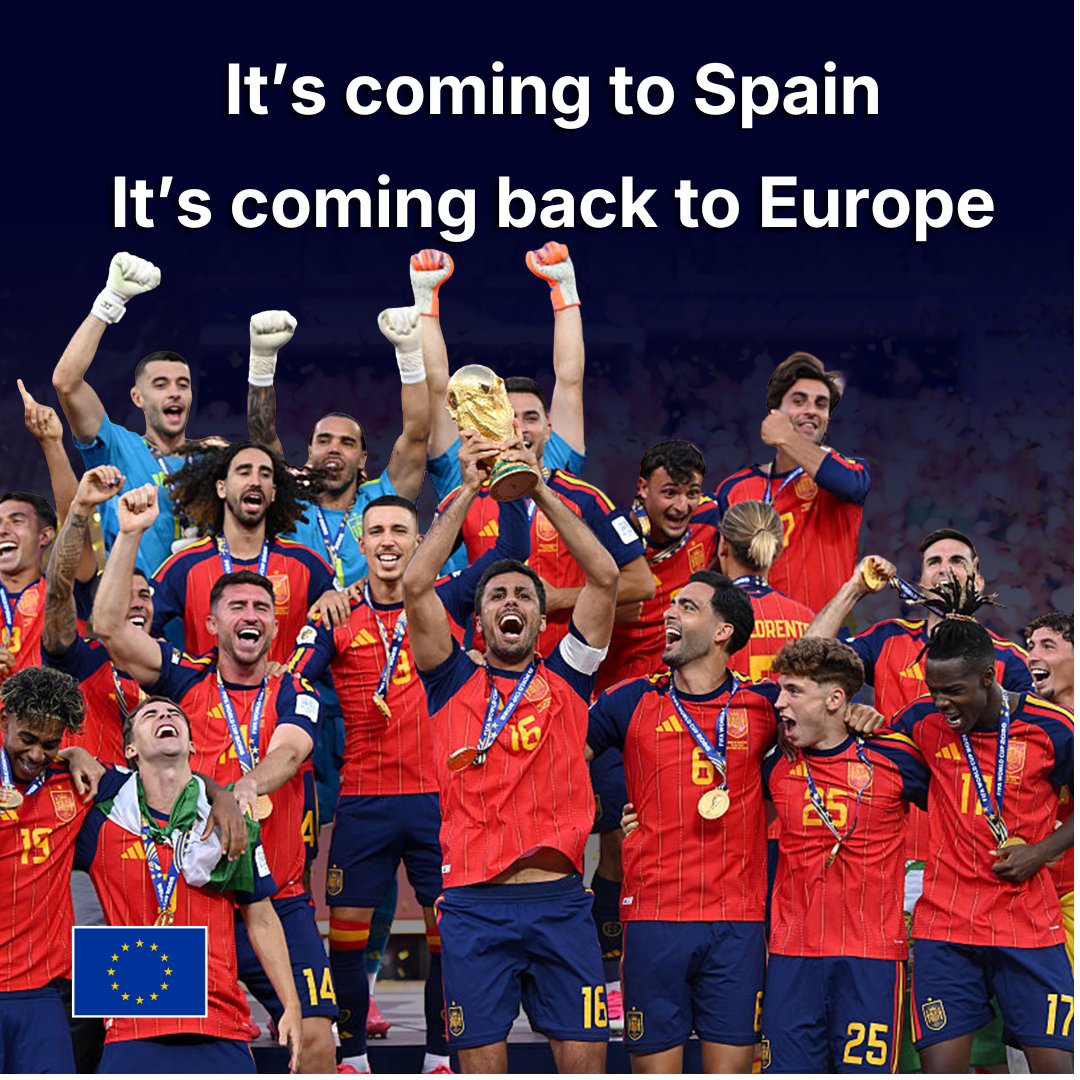
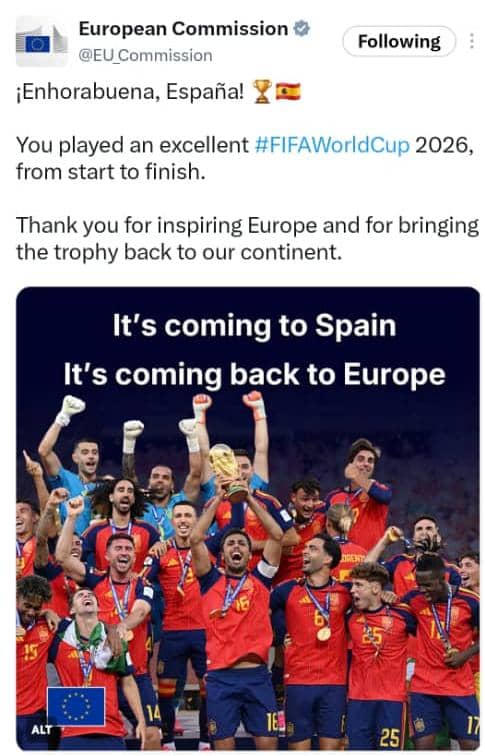
When the European Union congratulated Spain’s national team on winning the 2026 FIFA World Cup on its official X Account and sent the message “Enhorabuena, Espana. You played an excellent #FIFAWorldCup 2026, from start to finish. Thank you for inspiring Europe and for bringing the trophy back to our continent”, it said more than many people realized.
It was more than sports!
That single statement reinforced one of the most fascinating concepts in sports studies: geography still matters.
By welcoming the prestigious World Cup “back to Europe,” the EU transformed a national victory into a continental narrative.
Sports is often described as a universal language that transcends borders. Yet, when championships are won, geography quickly returns to the spotlight. Nations celebrate. Continents claim pride. Regions compare achievements.
Winning the World Cup enhances not only Spain’s reputation but also Europe’s image as a hub of football excellence. It reinforces the continent’s long-standing influence in developing talent, coaching philosophies, and elite competitions.
In this sense, the trophy becomes more than silverware, it becomes a symbol of geographical prestige.
Sports Geography
This is the essence of sports geography. It explores how location, culture, climate, history, and regional identity influence sporting success.
Spain’s triumph was not presented merely as a Spanish achievement; it was celebrated as a European accomplishment.
Some may argue that football belongs to the world and that geography should not matter. I disagree. Geography gives sport its emotional power.
The EU’s statement on X also reflects the geopolitical importance of sport.
Back in Russia 2018, France, a member of the EU won the World Cup.
Four years later, France reached the World Cup finals again in Qatar but lost to a Lionel Messi inspired Argentina from South America. The EU lost the prestigious World title to South America.
That defeat had implications beyond the venue of the match in Qatar.
Europe wanted it again and thanks to Spain, the EU reclaimed it from South America.
Football fans support countries because they share a homeland, a culture, or even a continent.
Truth be told; international tournaments such as the FIFA World Cup are built on geographical identity. Without nations and regions, the competition would lose much of its meaning.
The EU’s congratulatory message is therefore more than political diplomacy. It is an acknowledgment that geography remains deeply embedded in sport.
Every World Cup tells a geographical story of nations, regions, and continents competing not only for a title but also for identity, influence, and pride.
As Spain celebrates becoming world champions, Europe celebrates reclaiming football’s greatest prize. That shared celebration reminds us that while football may unite the world, geography continues to define how the world experiences victory.
OJEIKERE AIKHOJE has over 20 years experience in Sports Business and is Publisher of SportBusiness & Brands Magazine.
He writes about Sports Business and Sports Geography. He is founder of Nigeria’s foremost League Awards: League Bloggers Awards (LBA), the Sports Industry Awards Nigeria (SIA Nigeria) and MatchRoom Football Business Institute.
You can reach him at ojeikereaikhoje@gmail.com