 Sports Business Brand Latest Brand News, Sports, Entertainment, Marketing, Sponsorships

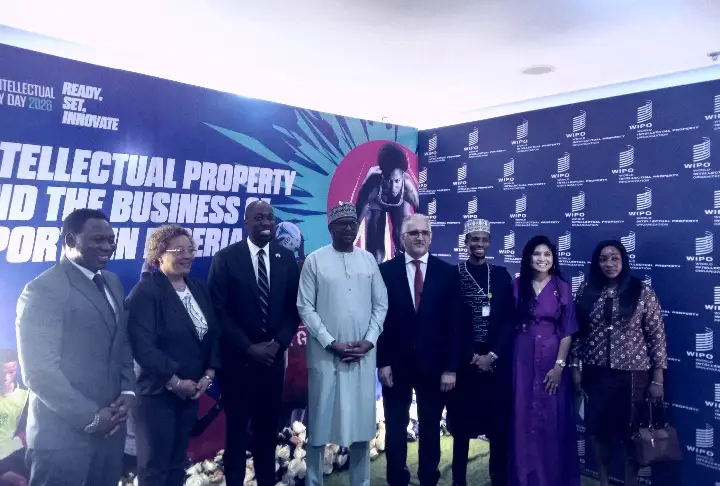
Chairman of the National Sports Commission, Shehu Dikko, has stated that intellectual property is critical in boosting the evolution of the sports economy, in Nigeria.
Dikko stated this while delivering the keynote address at the 2026 World Intellectual Property Day celebration in Abuja, on Monday, powered by the World Intellectual Property Organization (WIPO) Nigeria office, at the United Nations House in Abuja.
The event, organised by the World Intellectual Property Organisation (WIPO), was themed “IP and Sports: Ready, Set, Innovate” and held at the United Nations House in Abuja.
Nigeria is positioning Intellectual Property (IP) as a key driver of its sports economy growth, respected industry voices said on Monday.
Dikko maintained that intellectual property is at the root of the sports economy.
He said, “This theme speaks directly to the future of sports in Nigeria. For many years, we have spoken about sports mainly through the language of medals, trophies, passion and national pride. Those things remain important. They are the soul of sports. But today, sports has become much more than what happens on the field of play.
“Sports is now media rights. It is branding. It is sponsorship. It is merchandising. It is technology. It is data. It is content. It is athlete image. It is fan engagement. It is events, platforms, products and experiences.
“At the heart of all these is intellectual property. The central challenge before Nigeria is not whether we have sports talent, sports passion or sports audiences. We do. The real challenge is whether we can properly identify, protect, package and commercialise the intellectual property that sits behind our sports assets.”
In addition, he said: “Under the leadership of His Excellency, President Bola Ahmed Tinubu, GCFR, the Nigerian sports sector is going through a major reset. The scrapping of the Federal Ministry of Sports Development and consequent re-establishment of the National Sports Commission was not merely an administrative change. It was a clear statement that sports must now be treated as a national economic asset.
“That is the thinking behind the National Sports Commission’s flagship policy framework, the Renewed Hope Initiative for Nigeria’s Sports Economy, which we commonly refer to as RHINSE. The goal is simple: to move sports from dependency to productivity; from public expenditure to investment; from isolated events to commercial assets; and from raw talent to structured economic value.”
He stressed that Nigeria’s challenge lies not in talent, but in identifying, protecting, and commercialising sports-related intellectual property assets.
“Intellectual property is what transforms sports from mere activity into a viable economic asset,” he said.
He added that ongoing reforms under President Bola Tinubu aim to reposition sports as a contributor to national Gross Domestic Product (GDP) and job creation.
According to him, the Renewed Hope Initiative for Nigeria’s Sports Economy aims to drive investment and secure sustainable financing.
Dikko highlighted key challenges, including weak IP awareness, poor rights documentation, piracy, and limited understanding of image and data rights.
“We must build a culture where athletes, clubs, and federations understand and protect their intellectual property rights,” he said.
He also called for collaboration among the government, the private sector, and regulators to unlock value across the sports ecosystem.
In his remarks, WIPO Director-General Daren Tang said IP is the “invisible engine” powering global sports.
Mr Tang said IP connects athlete performance with innovation, business, and global reach, driving the multi-billion-dollar sports industry.
“Behind every sporting success is a framework of patents, trademarks, and copyrights enabling innovation and investment,” he said
He emphasised that IP supports advancements in sports technology, digital broadcasting, and fan engagement platforms, and reaffirmed WIPO’s commitment to leveraging IP for global economic growth and development.
A panel session examined how intellectual property can unlock value in the sports business and media.
Panelists included Beverley Agbakoba-Onyejianya, Jammal Mohammed, Gbemisola Abudu, and Emmanuel Olowononi.
They identified IP as critical to monetising sports through structured media rights, sponsorship deals, and brand protection.
The panelists called for improved legal frameworks, professional capacity, and stronger enforcement mechanisms in Nigeria’s sports sector.
They also stressed the need to educate athletes and administrators about the commercial value of their rights.
A consensus emerged that innovation, legal clarity, and collaboration are essential to building a competitive sports economy.
The event featured personalities such as former International, Daniel Amokachi and heads of key IP institutions, including Director-General of the Nigerian Copyright Commission, John Asein, and Registrar of the Trademarks Registry, Shafiu Yauri.
Others were UN Nigeria Resident Coordinator (A.I); Elsie Attafuah, Director-General NOTAP, Obiageli Amadiobi and Patents and Designs Registrar, Jane Igwe.
The seminar provided insights into leveraging intellectual property for sports development and economic transformation in Nigeria.